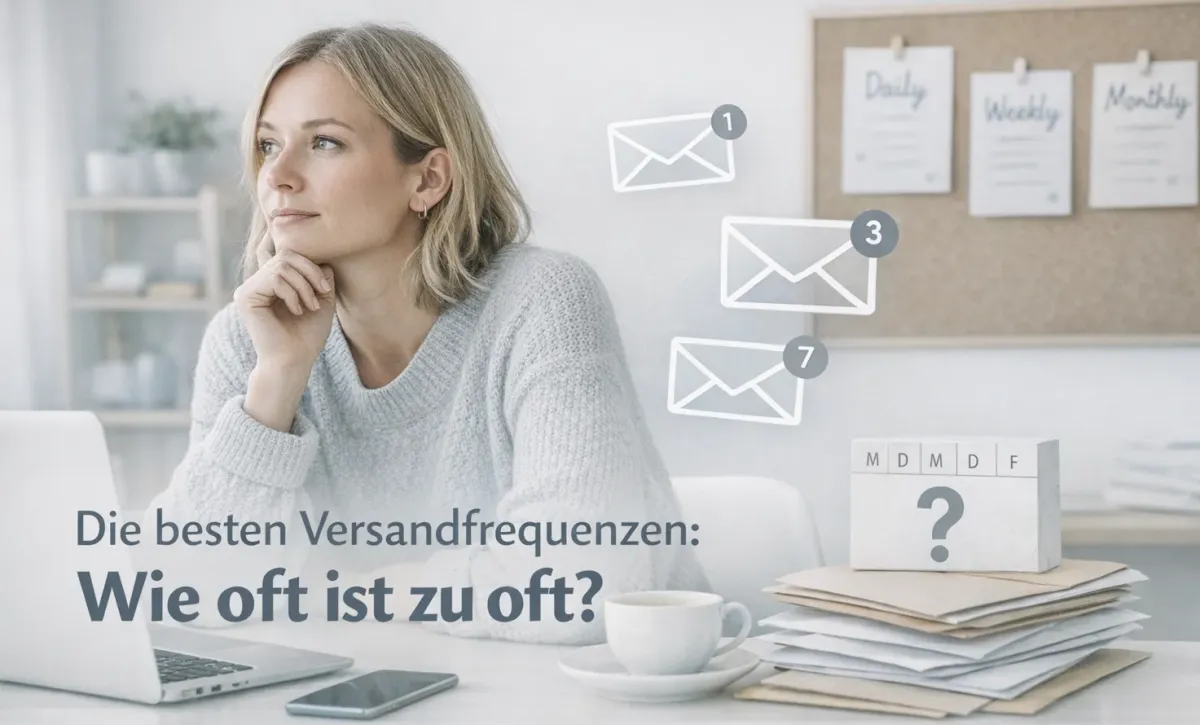
In the digital age, finding the balance between visibility and the risk of being perceived as spam is crucial. Companies must optimize their sending strategies to stay memorable without overwhelming their customers. But how often should an email actually be sent? This question requires a careful analysis of customer behavior and competitor practices.
Research shows that optimal sending frequency varies, depending on industry and target audience. However, some basic guidelines can help avoid excessive spam perception:
- Avoid daily emails to the same audience
- Test sending frequency with A/B tests
- Adjust for seasonal changes
Subscribers may lose interest or find the sender annoying if emails are too frequent. Therefore, A/B tests are a valuable method to determine the ideal frequency. 👨🔬 Adjustments for holidays or special events may also be necessary to stay relevant.
Ultimately, the key to success is the right mix of consistency and adaptation. A well-thought-out sending strategy takes customer feedback into account and adapts dynamically. Those who clearly differentiate from the competition will sustainably increase both visibility and customer loyalty.